


Table of Contents
- Best Moisture Wicking Fabrics for Trail Running: The Comparison Table
- Merino Wool vs Polyester for Running: Which Handles Trail Sweat Better?
- Moisture-Wicking Fabric for Hot Weather: Humidity, Evaporation, and Ventilation
- Quick-Drying Running Clothes: What Actually Matters on a Wet Trail
- Cotton vs Synthetic Running Clothes: Why Cotton Fails on the Trail
- Trail-Specific Conditions: Pack Straps, Abrasion, Layering, and Fabric Weight
- Best Moisture Wicking Fabrics for Trail Running: Picks and Pricing
- Conclusion
- Frequently Asked Questions
Last Updated: October 14, 2026
Best Moisture Wicking Fabrics for Trail Running: The Comparison Table
The best moisture wicking fabrics for trail running are polyester and nylon blends for hot, humid days, merino wool for cooler mountain air, and poly-Tencel-Spandex blends for runners who want one shirt that handles both. At Forcis, we build trail apparel around that third category, because most runners train across more than one climate in a single season. The table below compares how each fiber family actually behaves when you are sweating uphill for an hour.
Fabric |
Sweat Handling |
Dry Speed |
Abrasion |
Odor |
Best For |
|---|---|---|---|---|---|
Polyester |
Wicks and moves moisture fast |
Fastest |
Good |
Retains odor |
Hot, humid races |
Nylon |
Wicks well, holds shape |
Fast |
Excellent |
Moderate |
Rocky, brushy trails |
Merino wool |
Absorbs then releases vapor |
Slow |
Fair |
Best |
Cool mornings, multi-day |
Poly-Tencel-Spandex |
Wicks with soft skin feel |
Fast |
Good |
Good |
One-quiver trail wear |
Cotton |
Holds sweat against skin |
Very slow |
Fair |
Poor |
Nothing on a trail |
Textile Exchange materials overview
Merino Wool vs Polyester for Running: Which Handles Trail Sweat Better?
Polyester handles trail sweat better in heat; merino wool handles it better in cool, damp, or multi-day conditions. That is the short answer, and it holds up across most real trail scenarios.
Where Polyester Wins on the Trail
Polyester is a synthetic fiber that moves liquid sweat along the yarn to the surface, where it evaporates. It dries faster than any natural fiber, weighs little when wet, and costs less. On a hot exposed climb, that speed matters more than anything else.
The trade-off: polyester picks up odor quickly and stays smelly. For a daily training shirt, that means more washing.
Where Merino Wool Wins
Merino wool absorbs moisture into the fiber, then releases it as vapor. It resists odor naturally and feels warm even when damp, which is why hikers and ultra runners favor it for cool starts and multi-day efforts.
The trade-off is dry time. A soaked merino shirt stays heavy longer than polyester, and fine wool is less resistant to abrasion from pack straps and brush.
Moisture-Wicking Fabric for Hot Weather: Humidity, Evaporation, and Ventilation
The practical consequence: a shirt that feels great on a dry 28°C climb can feel like a wet towel on a humid 28°C climb, even though the fabric is identical.
What actually helps in humid heat:
- Open knits and mesh panels. A loose, open-knit polyester or nylon moves air through the fabric, which speeds evaporation at the surface. Tight, heavy "technical" knits trap a humid microclimate against your skin.
- Lighter fabric weights. Thinner fabric holds less water and dries faster. A 100-130 gsm open knit outperforms a 180 gsm tight knit in humid conditions, even when both are polyester.
- Looser cuts and ventilation zones. Mesh under the arms, a vented back panel, and a relaxed fit all increase air exchange. A skin-tight shirt with no mesh has nowhere for vapor to go.
A common pattern among trail runners in humid climates is to size up slightly in summer shirts. The extra air gap between skin and fabric improves ventilation without adding meaningful weight.
American College of Sports Medicine position on exercise and fluid replacement
Quick-Drying Running Clothes: What Actually Matters on a Wet Trail
Quick-drying running clothes matter most when you cross streams, run through rain, or sweat through a shirt in the first hour of a long effort.
Thin polyester and nylon dry fastest. Blends with Tencel, a soft cellulosic fiber, dry quickly while feeling less plasticky against skin.
A practical test: wet the shirt in a sink, wring it once, and hang it.
Cotton vs Synthetic Running Clothes: Why Cotton Fails on the Trail
Cotton fails on the trail because it absorbs sweat instead of moving it, then holds that moisture against your skin. The result is a heavy, clingy shirt that chafes, saps heat, and stays wet long after you stop.
Synthetic fibers and wool both manage sweat better. Cotton's only advantage, softness, disappears the moment it is soaked.
- Cotton absorbs many times its weight in water and releases it slowly
- Wet cotton loses insulation and cools you rapidly when you slow down
- Seams and hems on wet cotton create friction points that cause chafing
- Natural fibers can work on the trail, but cotton is not one of them
REI expert advice on layering and moisture management
Trail-Specific Conditions: Pack Straps, Abrasion, Layering, and Fabric Weight
Trail conditions punish fabric in ways road running never does. The three forces that matter most are repeated abrasion, sustained pressure, and rapid weather change, and they interact in ways that a simple fiber comparison misses.

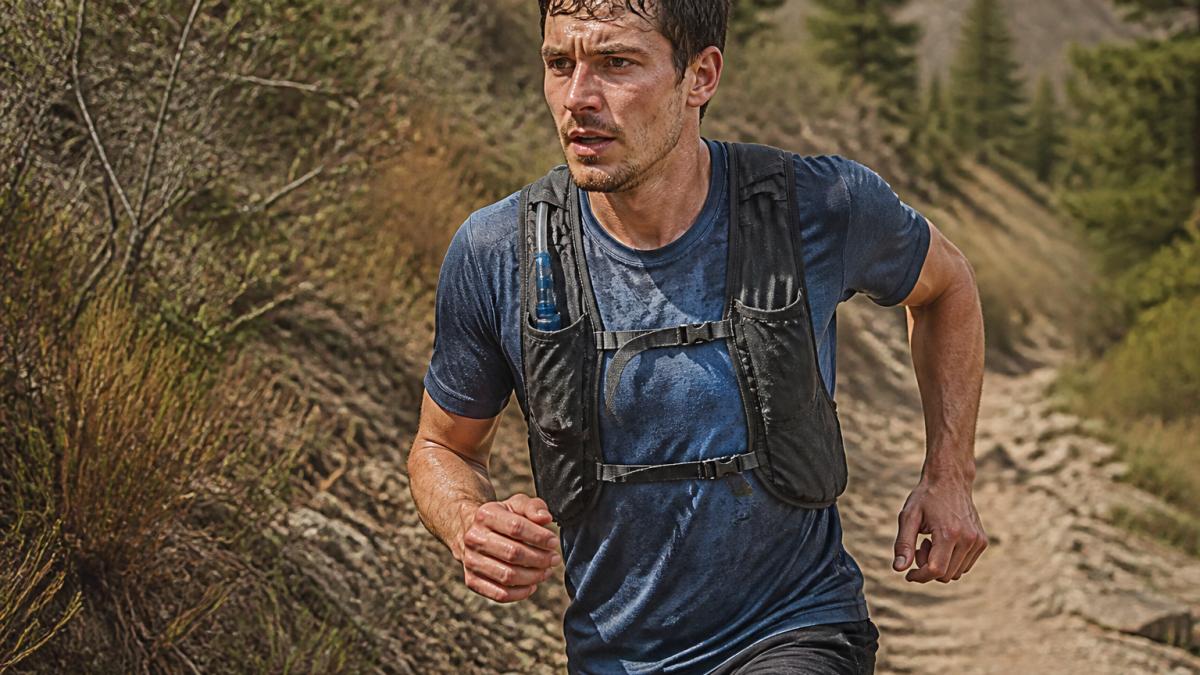
Pack Straps and Hydration Vests
A hydration vest or running pack creates two problems no road shirt faces.
The result is predictable: chafing under the straps, premature wear at the contact points, and a clammy band across the chest and waist. Fabric choice and construction both matter here.
- Tighter knit structures resist pilling and thinning under strap friction better than loose, lofty knits.
- Nylon content in high-wear zones improves abrasion resistance. A polyester-nylon blend often outlasts pure polyester under a pack.
- Flatlock seams sit flat against skin and reduce friction points under straps. Raised or bulky seams are the first place chafing starts.
- Stretch lets the shirt move with your shoulders during scrambles and pole pushes instead of tearing at the seam.
A common pattern is to rotate shirts so the same one is not always worn under the pack.
Brush, Rock, and Mud
On overgrown or rocky trails, brush scrapes your arms and sides, and mud and grit work into the weave. Loose knits snag; tight knits shed debris more easily. Nylon's toughness gives it an edge in brushy terrain, while very fine merino can pill and thin faster under the same abuse.
Matching Fabric Weight to Weather and Effort
Fabric weight, measured in grams per square meter (gsm), decides how a shirt performs across a changing day. The key insight competitors miss: conditions change during a run, and so does your effort level. A shirt chosen for the start line may be wrong by the summit.
Conditions |
Fabric Weight |
Fiber Choice |
Why |
|---|---|---|---|
Hot and humid |
Light (100-130 gsm) |
Open-knit polyester |
Maximizes ventilation and dry speed |
Cool morning start |
Light plus layer |
Merino or blend base |
Warm when damp, odor-resistant |
Windy ridge |
Mid (130-170 gsm) |
Nylon blend with a shell |
Abrasion resistance plus wind block |
Wet and cold |
Mid |
Merino under a waterproof |
Retains warmth when wet |
Long effort with pack |
Mid |
Poly-nylon blend |
Balances dry speed and durability |
Layering for Changing Conditions
The trail-specific layering principle is simple: start slightly cool, carry a light layer, and adjust before you sweat through your base. A soaked base layer becomes a liability on a descent or a windy ridge because evaporation pulls heat from your skin faster than your body can replace it.
- Carry a packable long-sleeve layer for exposed ridges and cold valleys.
- A light long-sleeve tee over a tank covers most temperature swings without adding much weight.
- In wet and cold conditions, merino under a waterproof shell retains warmth better than a synthetic base, which can feel clammy once soaked.
- On long efforts, consider a mid-weight poly-nylon blend that balances dry speed with the durability a pack demands.
REI expert advice on layering and moisture management
Best Moisture Wicking Fabrics for Trail Running: Picks and Pricing
Forcis Mercury Runner 2.0 Short, $68. Built with ultra-light 4-way stretch fabric and a breathable brief mesh liner, plus a hidden back yoke zipper pocket for keys or a gel.

Forcis Essential Tech Tank, $36. Poly, Tencel, and Spandex. Lightweight, breathable, and moisture wicking, with Tencel adding softness.
Forcis Standard Issue Tech Tee, $39. A lightweight Poly-Tencel-Spandex blend made for warmer conditions.
Forcis Essential Tech Long Sleeve Tee, $42. Same moisture-wicking blend in a long-sleeve cut.
Forcis Essential Tech Short Sleeve Tee, $36. Poly, cotton, and Spandex blend that wicks and stretches.
Conclusion
Choosing trail fabric is a trade-off between dry speed, durability, and skin feel, and no single fiber wins everywhere. Buy for the worst conditions you actually run in, then layer for the rest. Forcis builds technical tees, tanks, and running shorts in moisture-wicking blends for exactly that range, with all-terrain design, a 25% first responder discount, and member perks and early access.
Frequently Asked Questions
What fabric is best for trail running?
Polyester and polyester blends are the most practical choice for most trail runners. They are lightweight, wick sweat away from the skin quickly, and dry fast enough to handle rain, creek crossings, and heavy perspiration. Blends that add Tencel improve skin feel without giving up moisture transfer. Merino wool is a strong alternative for cooler runs, multi-day trips, and odor control, though it dries more slowly than polyester and costs more.
Is merino wool or polyester better for trail running?
It depends on conditions and how long you're out. Polyester moves sweat to the surface and dries fastest, which matters in hot, humid weather and on long efforts where fabric stays wet. Merino wool regulates temperature well, resists odor over multiple wears, and feels comfortable against skin in cooler conditions, but it absorbs more water and takes longer to dry. Many trail runners use polyester for summer and merino for shoulder-season runs.
Are cotton clothes bad for trail running?
Yes, cotton is a poor choice for trail running. Cotton fibers absorb sweat and hold it against your skin instead of moving it to the surface for evaporation. Once saturated, cotton becomes heavy, clings, and loses insulation, which increases chafing and skin irritation. On a long or wet trail run, a cotton shirt can stay damp for hours. Synthetic fabrics and wool blends dry far faster and manage sweat more effectively.
What fabric dries fastest when running?
Thin polyester and polyester-blend knits dry fastest. Their fibers absorb very little water, so moisture sits on the surface and evaporates quickly with airflow and body heat. Lightweight mesh panels speed this up further. Nylon dries reasonably fast but holds slightly more water. Merino wool and cotton both dry noticeably slower because their fibers absorb moisture internally.
What should I wear for trail running in hot, humid weather?
Choose the lightest moisture-wicking fabric you can find, ideally a thin polyester or polyester-Tencel blend with mesh ventilation. Light colors reflect heat, and a relaxed fit lets air move between fabric and skin. Avoid cotton entirely in humid conditions because it will not dry. A lightweight tech tank or short-sleeve tee paired with a lined running short with a breathable mesh liner covers most hot-weather trail runs.
How should trail-running clothes fit to wick sweat effectively?
Trail-running tops should sit close to the skin without being tight. Contact between fabric and skin is what lets moisture transfer happen, so a loose, baggy shirt traps sweat instead of moving it. At the same time, seams that press into shoulders under a pack can cause chafing, so check fit with your hydration vest on. Shorts should allow full stride without riding up, and a mesh liner should sit flat against the skin.


